World Expo Museum of China Opens to the Public

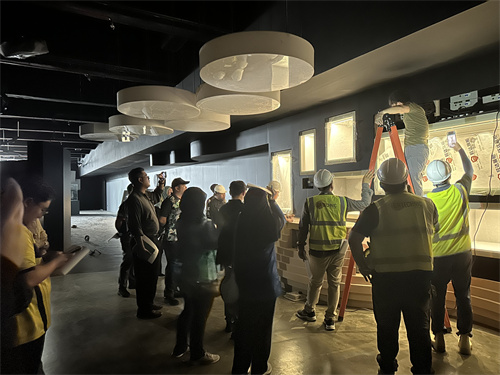
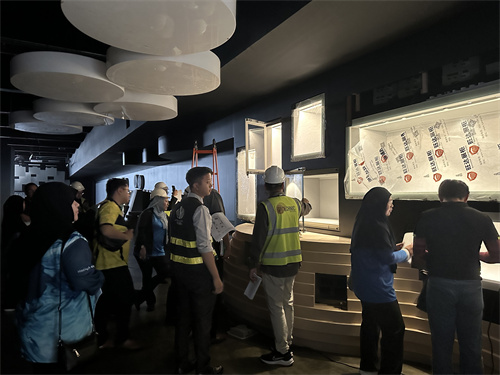
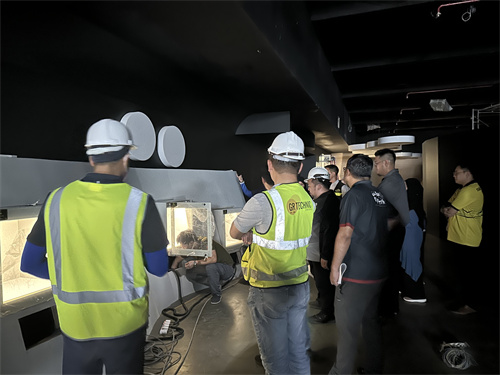
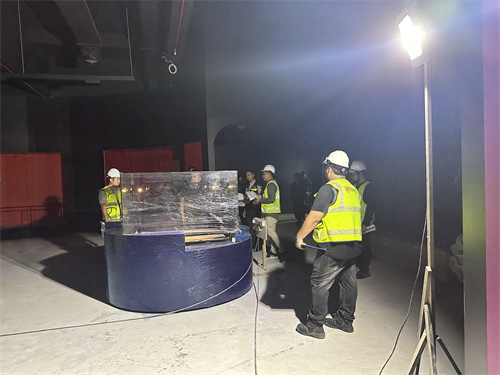
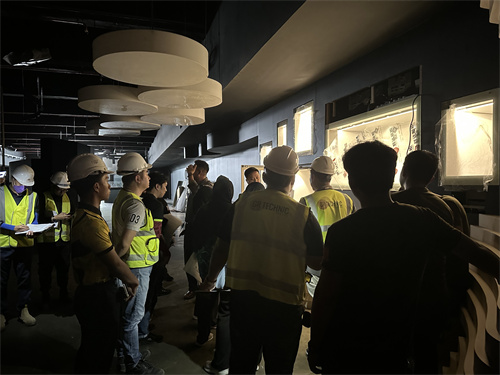
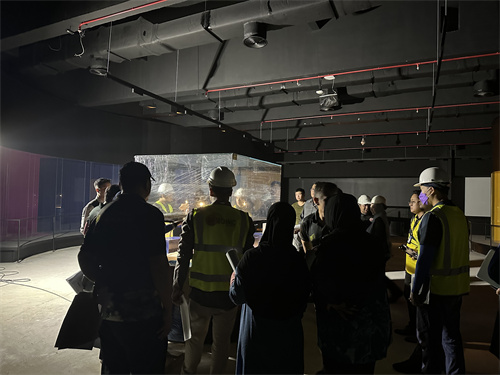
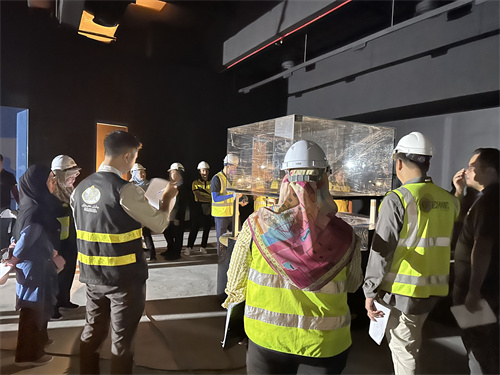
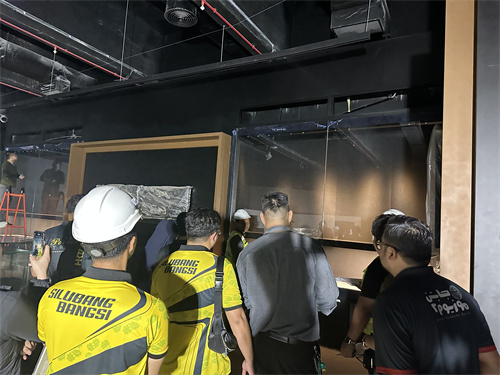
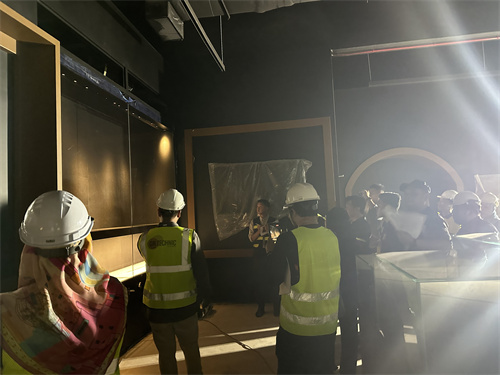
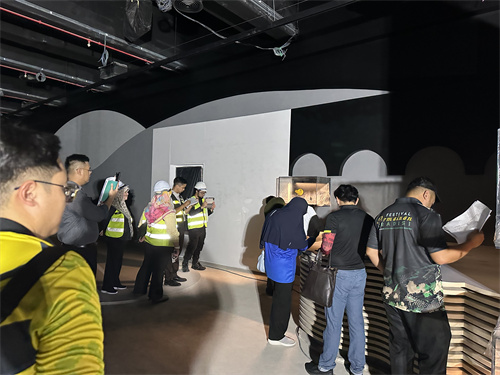
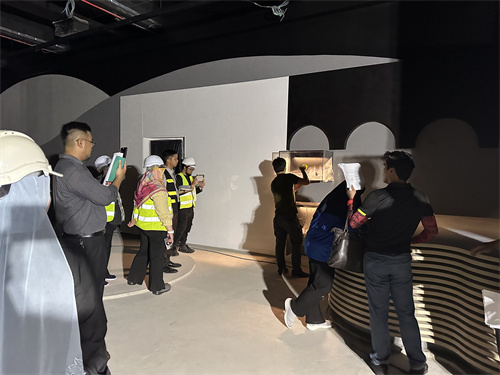
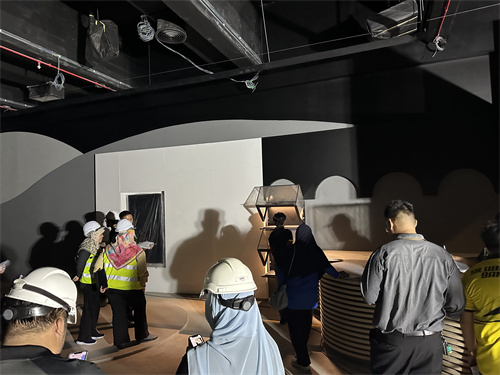
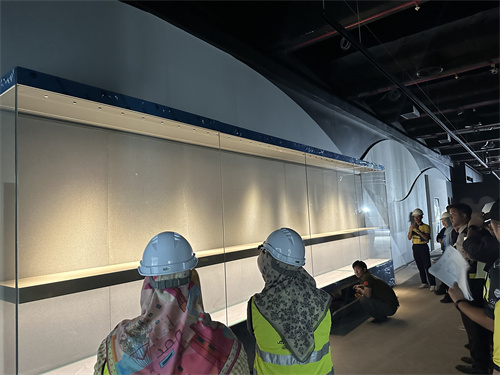
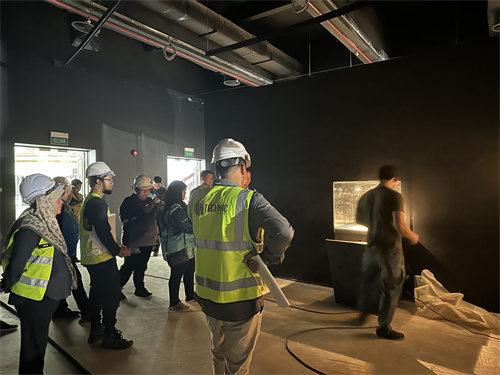
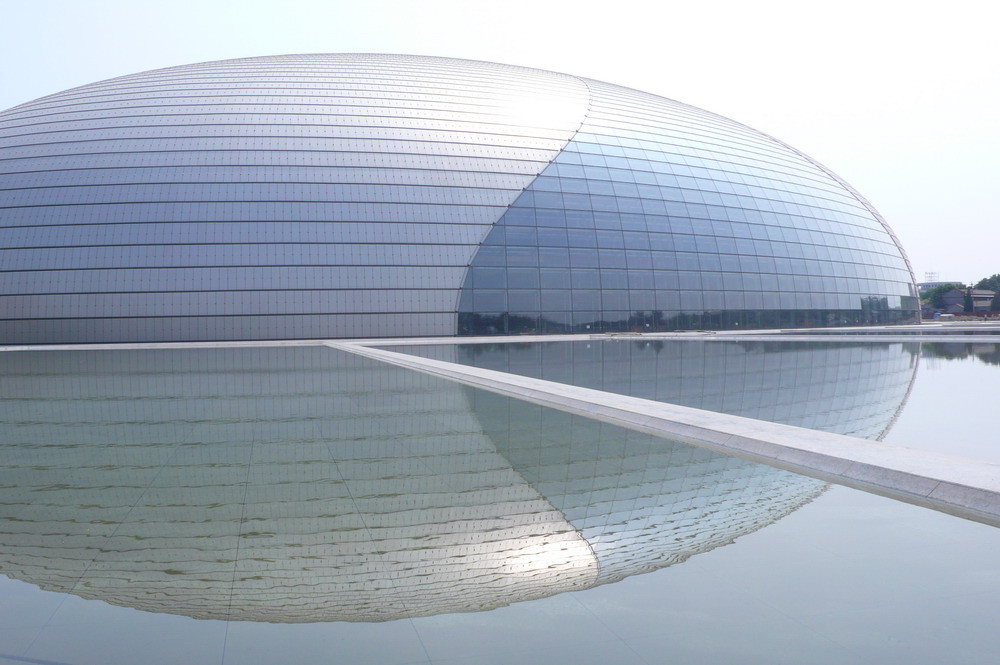
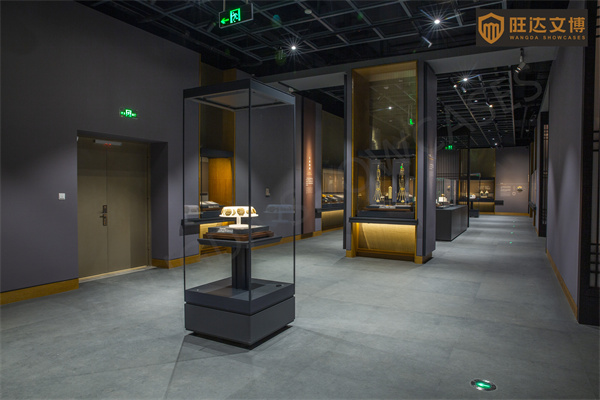
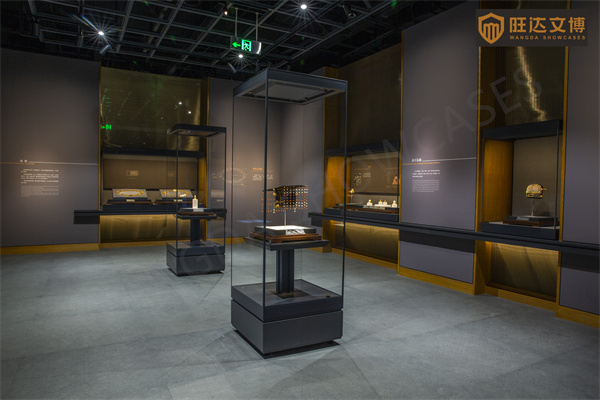
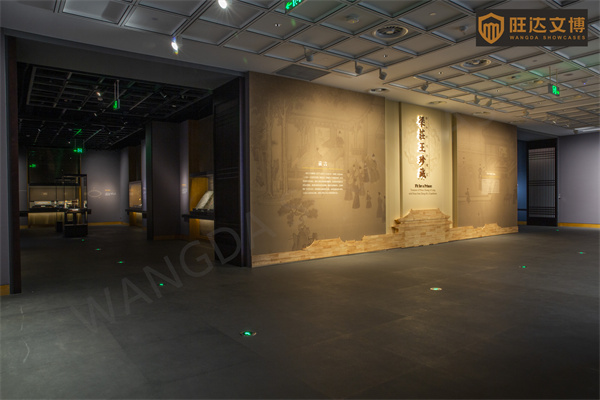
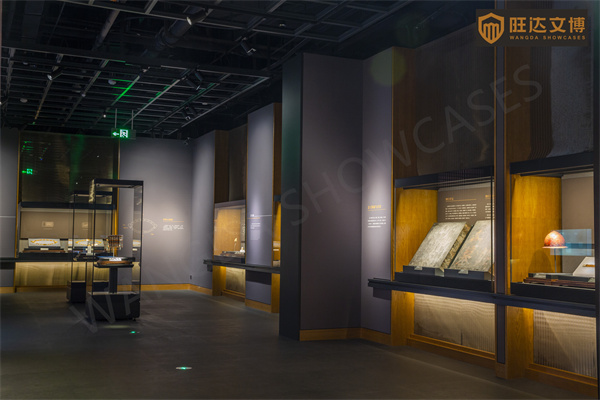
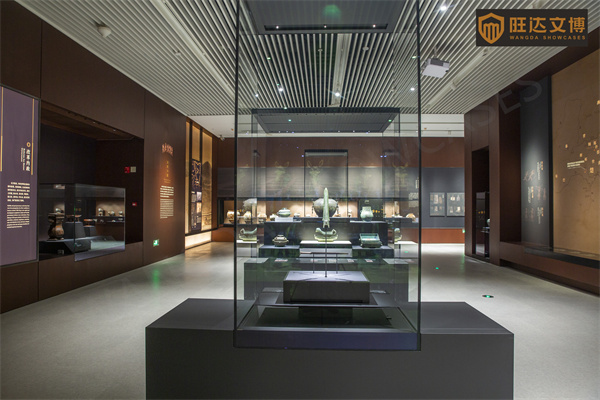
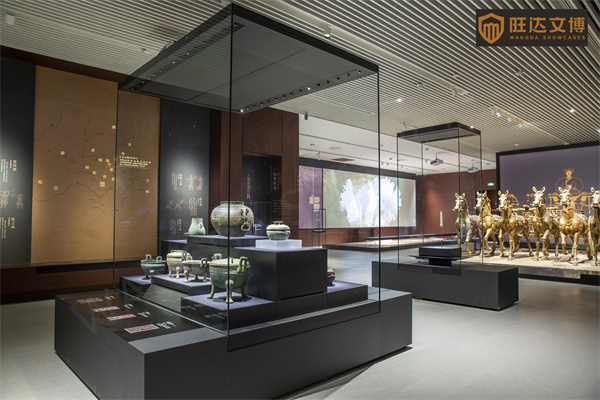
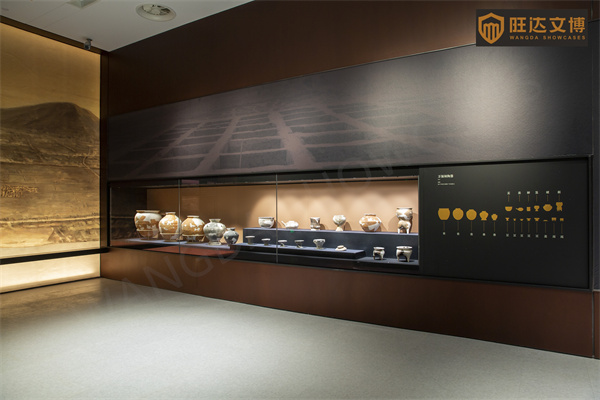
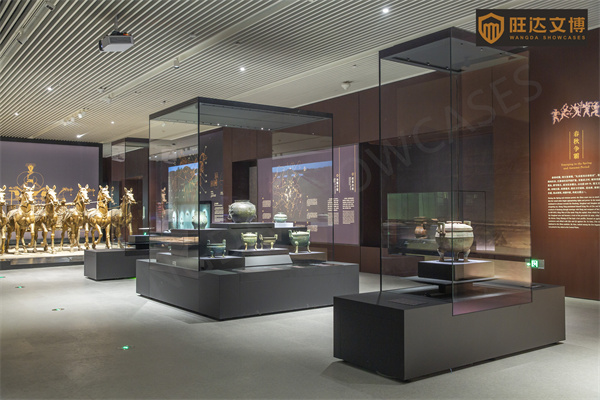
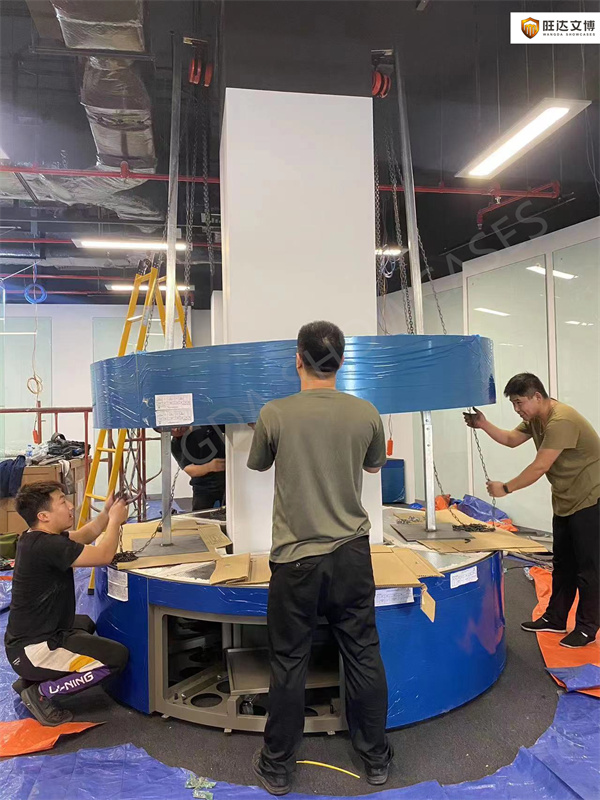
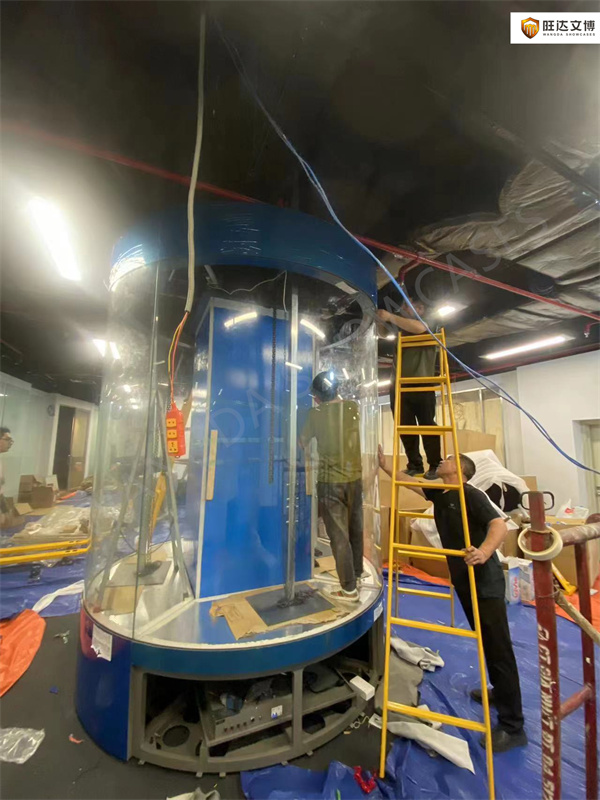
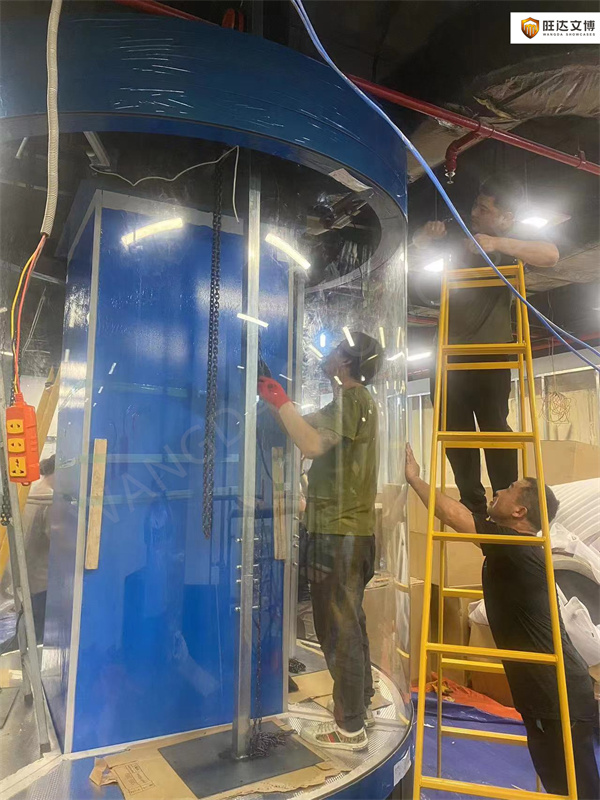
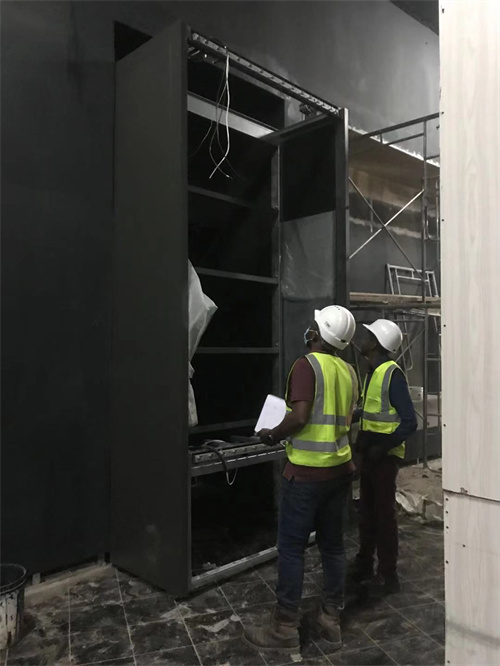
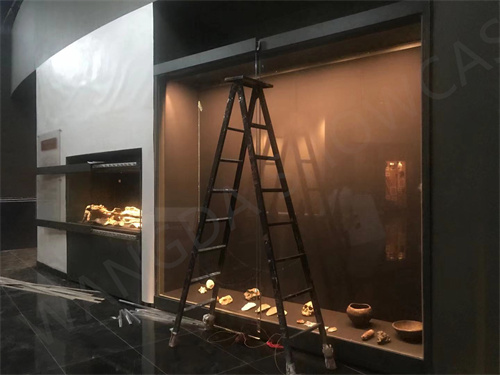
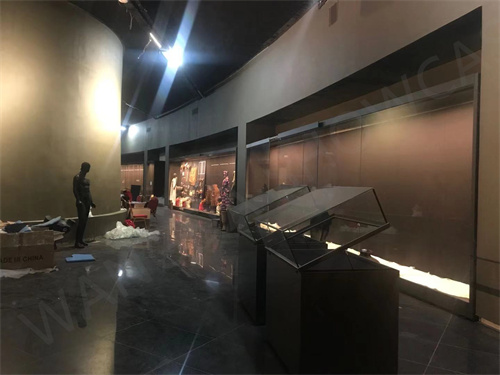
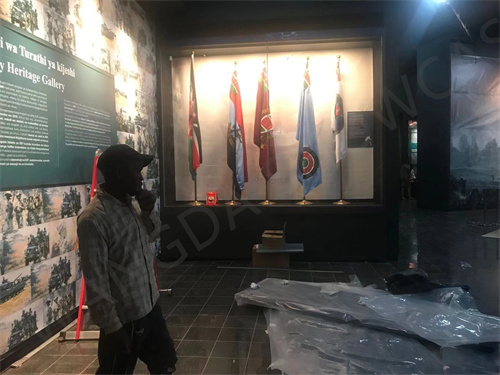
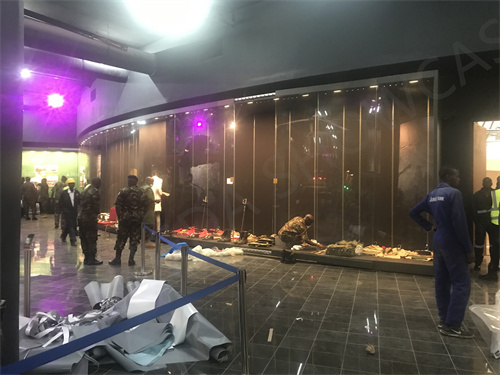
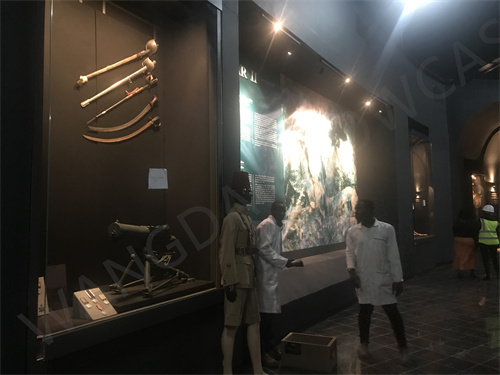
Equipped with all the museum display cases customized by WANGDA SHOWCASES, World Expo Museum of China(in Shanghai) is the world’s only official World Expo-themed museum co-built with the Bureau International des Expositions (BIE). It also serves as BIE’s sole official museum and the global documentary center for World Expositions, and is classified as a National Class Museum of China.

With 6 floors above ground, 1 basement floor, the construction area is totaled 46,550 sq.m. (31,950 sq.m. area above ground, 14,600 sq.m. area underground). Collection cover 28,000 artifacts, historical archives and state gifts from all countries, covering the full history of World Expositions dating back to the inaugural Great Exhibition of the Works of Industry of All Nations in London, 1851.

Permanent Exhibition Halls

The exhibition narrates the complete chronicle of World Expositions from the 1851 London Great Exhibition, through Expo 2010 Shanghai, to future expos. The exhibition design was jointly developed by Chinese, Western and Italian teams.

Hall 1: Global Stage (1st Floor)

Opening gallery tracing the origins of World Expositions

  • Core Exhibit: 1:100 scale miniature replica of London’s Crystal Palace, landmark building of the first World Expo.
  • Content: The industrial revolution backdrop that gave birth to World Expositions, early participation of nations; interactive ground projection triggering animations of national flags when stepped on.

Hall 2: Path of Progress (2nd Floor)

History of World Expositions from 1851 to 1945 Displays steam machinery, industrial innovations and early urban planning artefacts, documenting how science and technology transformed human life.

Hall 3: Faith in Optimism (2nd Floor)

World Expositions between the two World Wars, featuring art, decorative styles and new lifestyle concepts, with a large collection of vintage Expo posters and craftworks.

Hall 4: Facing Global Challenges (3rd Floor)

Post-war modern expos addressing worldwide issues including urbanisation, the environment and population; a replica of the giant ecological green wall from the Urban Planet Pavilion of Expo 2010.

Hall 5: A Grand Global Gathering (4th Floor)

Comprehensive overview of Expo 2010 Shanghai China, recreating the vibrancy of the original expo site, silhouettes of national pavilions, volunteer archives and a full range of Haibao mascot collections.

Hall 6: World Civilisations (4th Floor)

A curated collection of precious state gifts presented by national pavilions worldwide Highlights include an emerald-inlaid Haibao from Colombia, the sacred peace flame lantern from Nepal, Thai guardian sculptures from Wat Pho, Austrian crystal tiger, Arabian horse sculpture from the UAE, Solomon Islands canoe bust, Bangladeshi memorial tapestry and hundreds of other national treasure-level diplomatic gifts.

Hall 7: Wisdom of China (5th Floor) – Must-See Gallery

  • Signature Exhibit: Dynamic version of Along the River During the Qingming Festival, the star exhibit originally housed in the China Pavilion of Expo 2010, a giant LED scroll with animated pedestrians, boats and flowing water.
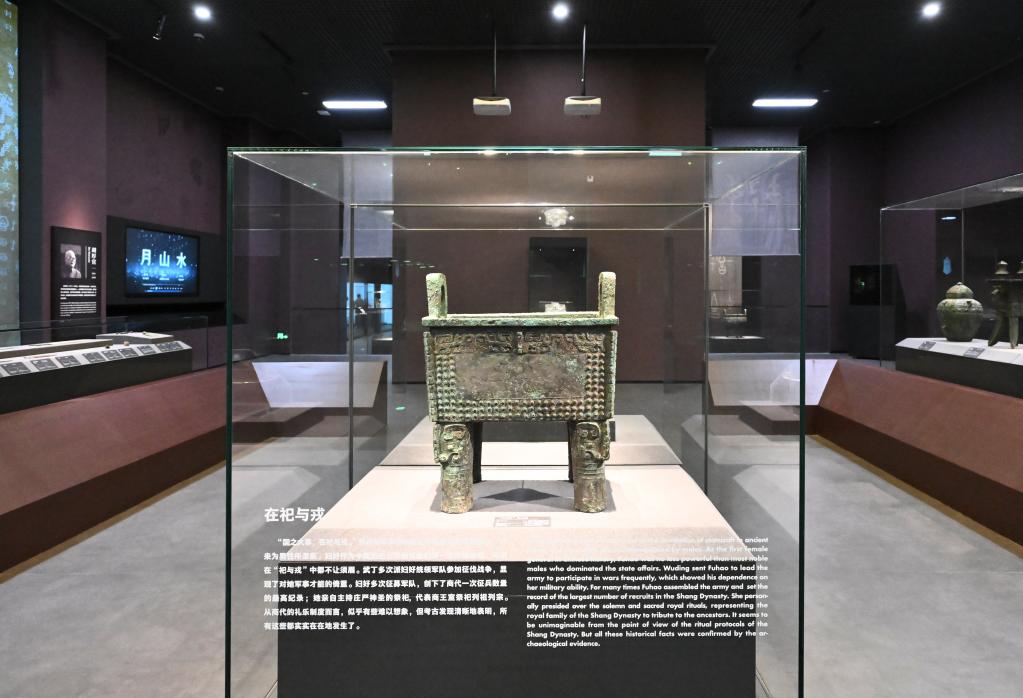
  • Supplementary Displays: Replicated exhibits from Chinese provincial and municipal pavilions, including a replica of the Houmuwu Ding, Chao embroidery, Jingdezhen porcelain, Tibetan prayer wheels and Huanghuali wood carvings.

Hall 8: Visions for the Future (5th Floor)

Post-2010 World Expositions (Milan, Dubai, Osaka etc.), focusing on sustainability, new energy and future cities; equipped with VR interactions, voice-activated star projection and an interactive message wall for visitors to leave notes on the future of expos.

FAW(First Automobile Works of China) Museum Opens

With all the museum display cases to be customized by WANGDA SHOWCSAES, the museum of FAW(First Automobile Works of China) open to the public by boasting a total construction area of 31,800 square meters. It houses over 150 physical display vehicles, more than a thousand precious historical artifacts and historical documents, alongside immersive scene recreations, unfolding an epic chronicle of the development of China’s automotive industry.

WANGDA SHOWCASES is honored to undertake the design and fabrication of museum showcases for the FAW Museum of China, delivering reliable display solutions for these precious exhibits bearing national memories.

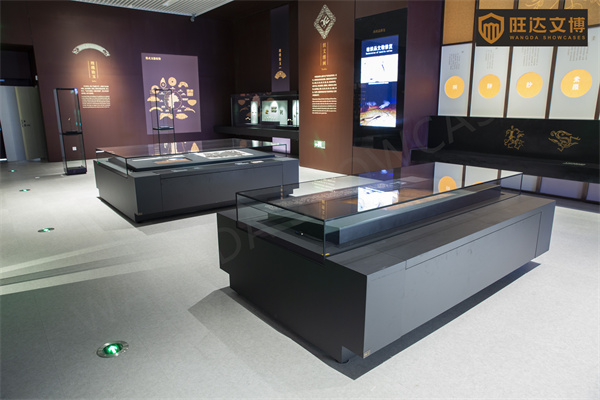
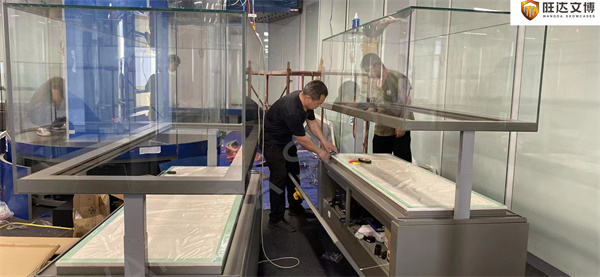
Most museum display cases in the exhibition hall are horizontal table display cases with a sealed steel structure. When display cases’ door are closed, the sealing strips are compressed to form an airtight barrier, effectively isolating humidity fluctuations and external pollutants, and creating a highly stable, low-disturbance micro-environment for exhibits. Two opening modes are available: electric lifting and manual flip-up, catering to different requirements for exhibit access and daily maintenance.


The height of horizontal table display cases is engineered in line with ergonomic principles, delivering a comfortable downward viewing angle and operating distance for visitors, and easing fatigue from prolonged standing. The display cases are arranged sequentially following the natural layout of the hall’s walls, forming a smooth visitor circulation route. The design maximizes interior space while creating a well-proportioned visual hierarchy.

The leg-style base of each table display case creates a light visual effect. Closed display case doors sit flush with the main frame, with sealing strips fully concealed within joints, delivering a neat, compact overall appearance that harmonizes with the exhibition hall’s orderly aesthetic. The built-in lighting system adopts arch-shaped lamps, casting evenly diffused light across exhibit surfaces to form uniform area illumination. This eliminates overexposure and shadowed zones, removes direct glare, and ensures every detail of the exhibits remains clearly visible.

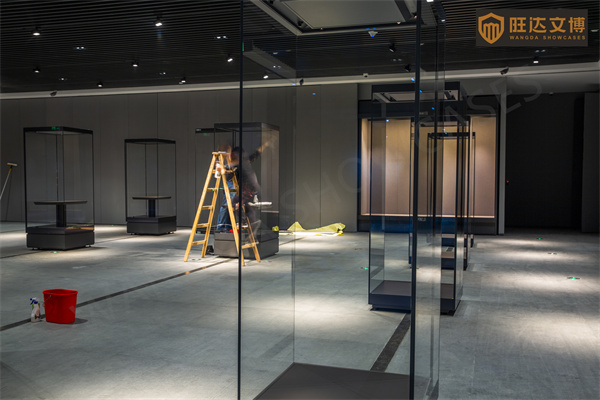
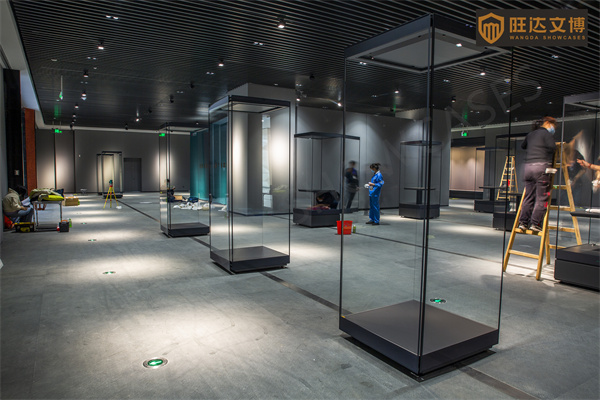
Large size of cantilever display cases feature hinged side-swing doors with a maximum opening at 90°, fully exposing the display case interior for unobstructed placement and retrieval of large exhibits during exhibition setup. The door panels are fitted with heavy-duty load-bearing hinges and auxiliary support structures, enabling smooth, stable opening without sinking or shifting.

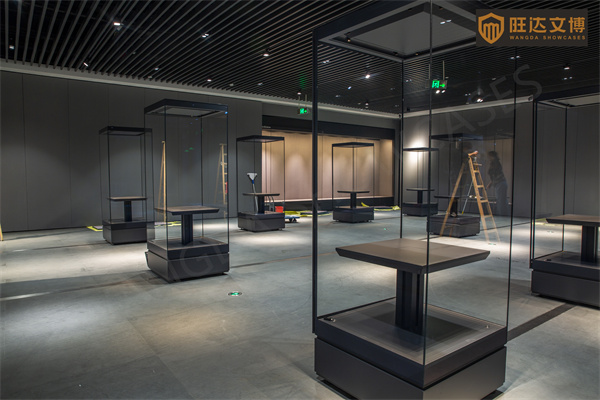
Large-scale exhibits are presented in freestanding display cases finished in white, which visually recedes to draw full focus onto the exhibits while matching the hall’s design language. The display case surface undergoes electrostatic powder coating with superior adhesion. Testing verifies consistent color retention for up to thirty years under standard exhibition conditions, with no fading or chalking.

WANDA SHOWCASES Complete the Museum Showcase Installation for NHM Thailand

WANGDA SHOWCASES carried out the customized design, production and on-site installation of exclusive museum display cases for the Natural History Museum, which is part of Thailand’s National Museum Complex. The tailor-made professional display cases fully comply with professional museum collection display standards and meet the comprehensive requirements for the display, protection and daily maintenance of natural specimens and paleontological collections.

The customized museum display showcases for this project adopt cutting-edge industrial sealing protection technology, which can effectively isolate external moisture, dust and air pollutants, creating a stable and safe display and storage environment for museum collections. Equipped with a full-electric intelligent opening system, the museum display cases support multiple opening modes including electric drive-out and electric movement to left/right. A manual emergency opening device is additionally configured to balance the convenience of daily operation and the safety of emergency scenarios.

In terms of safety protection, the display cases are equipped with three-level safety system to build a solid line of defense for collection safety. The first-level safety adopts ASSA ABLOY dual safety electronic locks to lock the lower access doors of the display cases and prevent unauthorized opening. The second-level safety applies electric control locks to manage the overall opening circuit of the equipment and realize precise control of access permissions. The third-level safety is equipped with wired control handles. The linkage of multiple protection mechanisms minimizes potential safety risks and ensures full safety and controllability of museum collections.

In terms of display and layout practicality, the customized display cases feature a maximum opening rate of 80%. The ultra-large opening space adapts to the display, layout, maintenance and handling of large natural specimens and heavy cultural relics, greatly improving the museum’s layout efficiency and satisfying the demand for diversified and large-scale exhibit display.


Derajat Museum(D.I.Khan Museum) in Pakistan Opens to the Public

The Derajat Museum with all the museum display cases customized by WANGDA SHOWCASES opens to the public. The Derajat Museum was established by the Directorate General of Archaeology & Museums KP with support from the World Bank-assisted KITE Project, showcases the region’s rich cultural heritage through artifacts, relics, and exhibits highlighting its history and significance.

DERA ISMAIL KHAN, the historical Town Hall of Dera Ismail Khan, a landmark built in the classic British colonial architectural style, has been given a new life after a major conservation and restoration effort.


FOSHAN MUSEUM OPENS TO THE PUBLIC

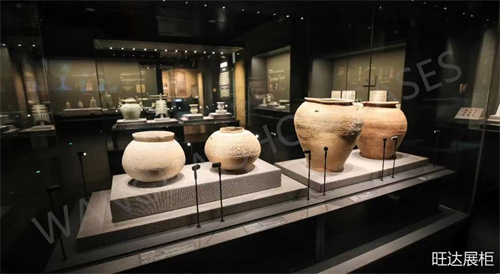
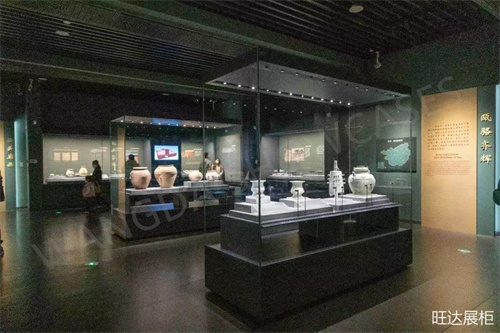
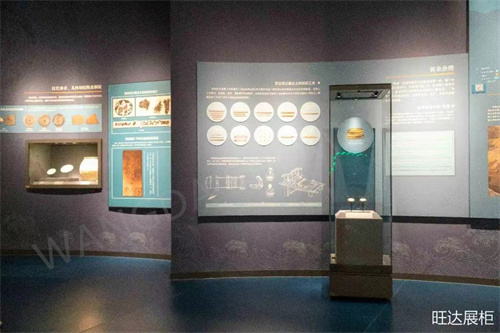
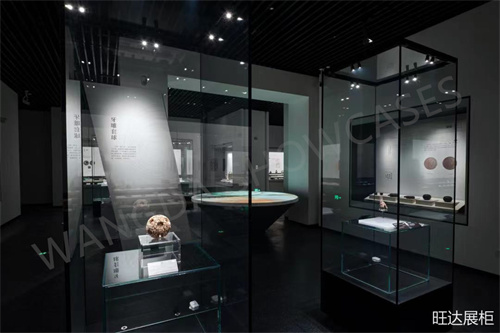
The Foshan Museum in Guangdong China commences trial opening today (September 29th). With a total construction area of 42,000 square meters and an exhibition area of over 5000 square meters, the Foshan museum holds three basic exhibitions and has three exhibition halls of national treasure hall, immersive experience area, temporary exhibition hall. Total 34,400 historical artifacts including 6,323 precious artifacts are collected by Foshan Museum.

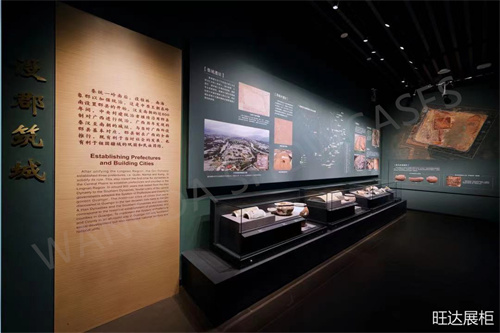
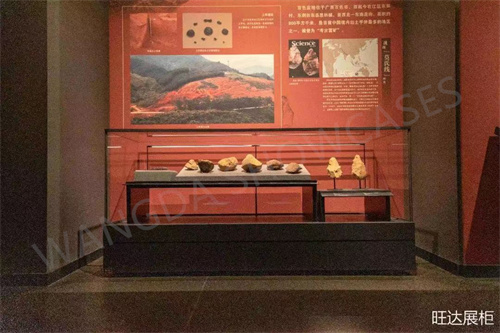
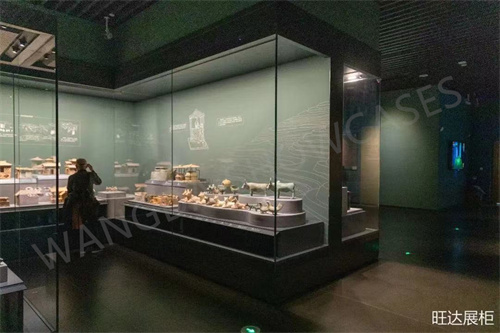
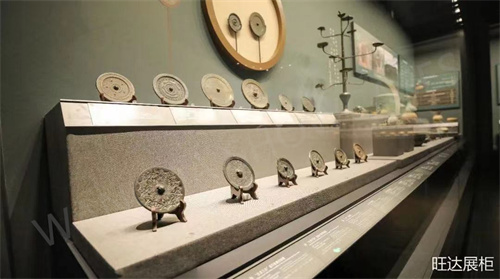
All the museum grade display cases/showcases for the basic displays of “Scenery Lingnan(South of the Five Ridges) – Foshan Intangible Cultural Heritage Exhibition” and “Shiwan is a beautiful pottery bay”, as well as for the National Treasure Hall are designed, produced, and installed by WANGDA SHOWCASES.


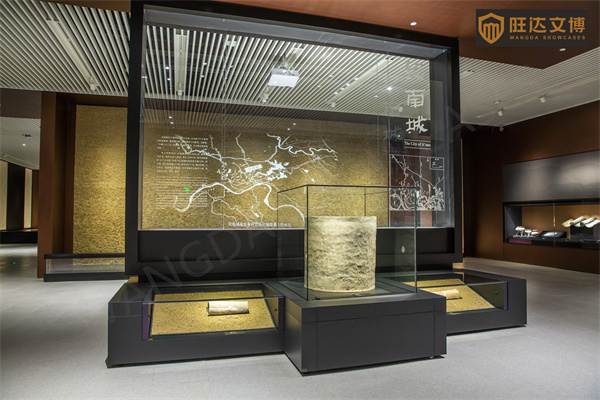
Professional museum showcase installation for Xi’an Stele Forest Museum by WANGDA SHOWCASES

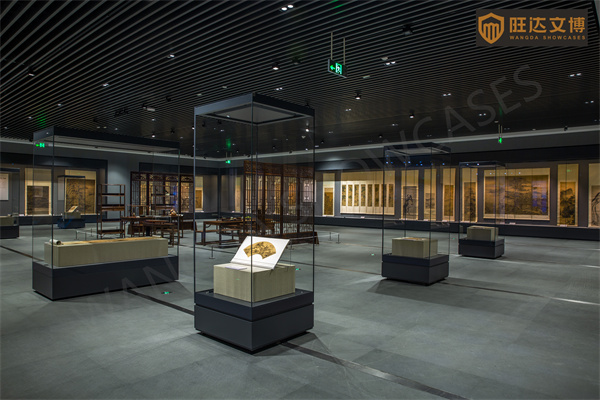
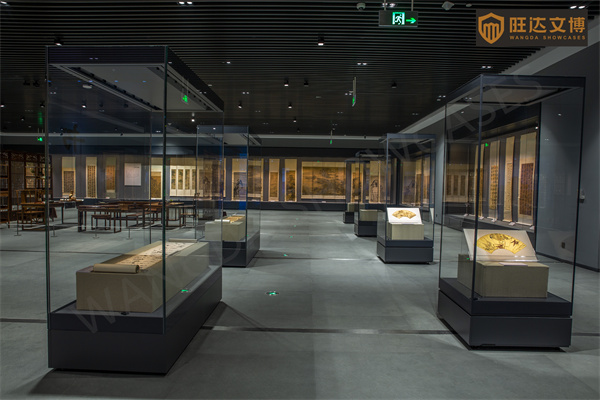
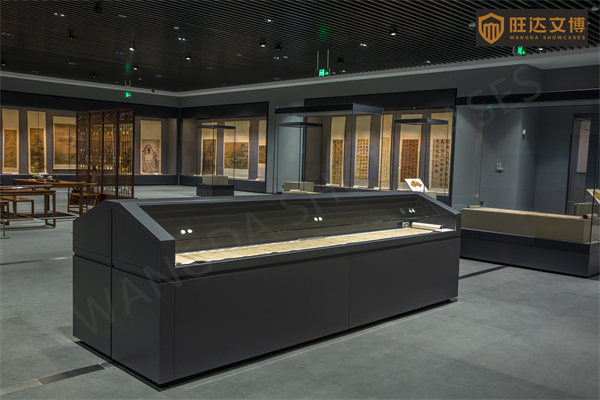
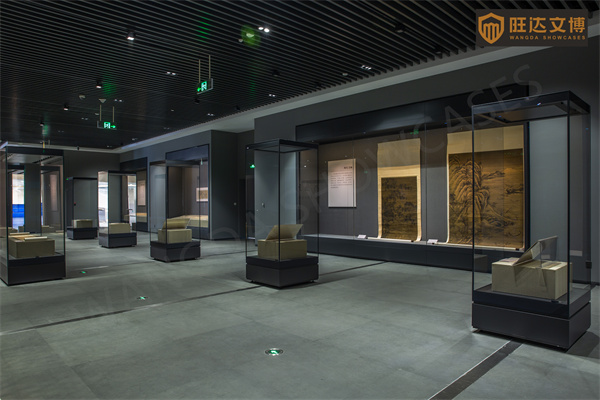
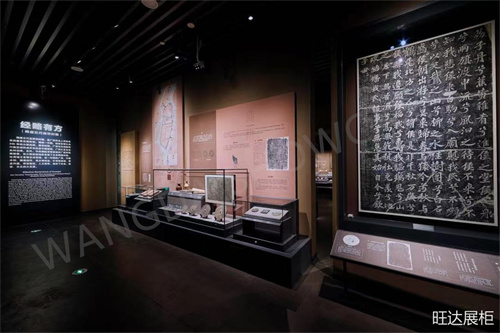
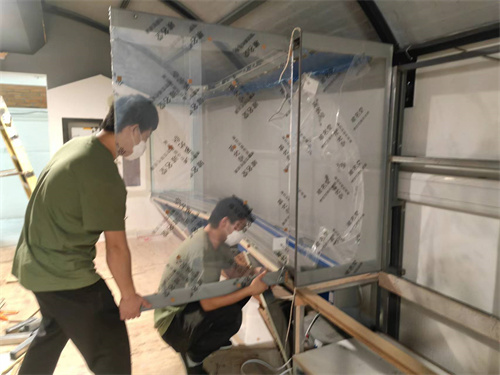
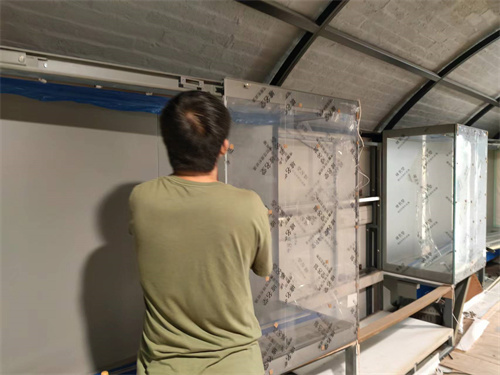
WANGDA SHOWCASES carries on professional on-site installation of customized museum display cases/museum showcases for Xi’an Stele Forest Museum.

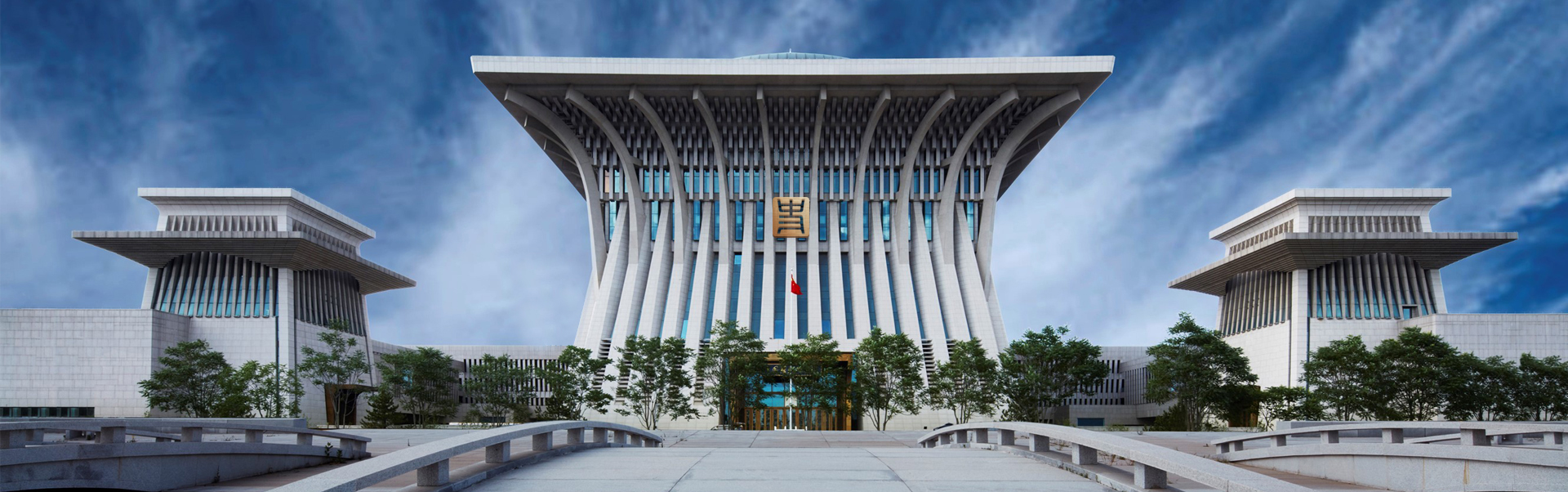
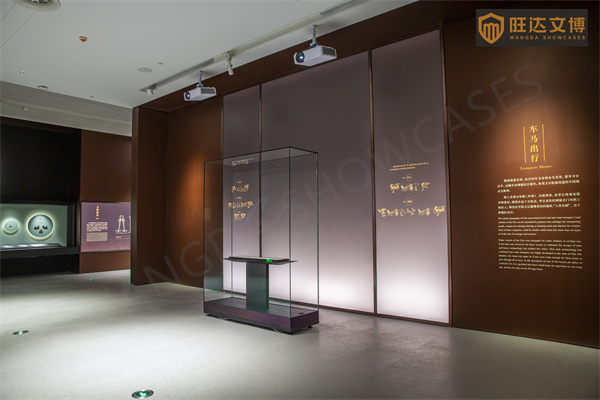
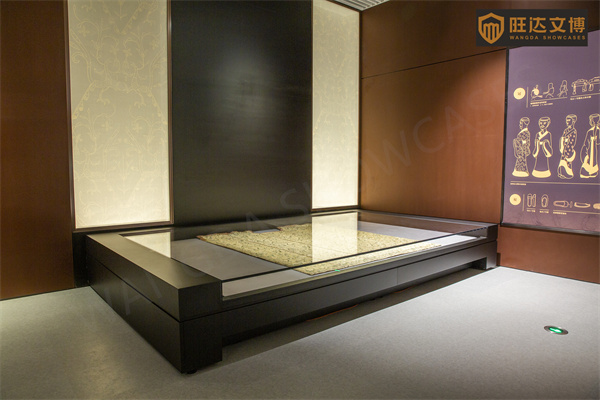
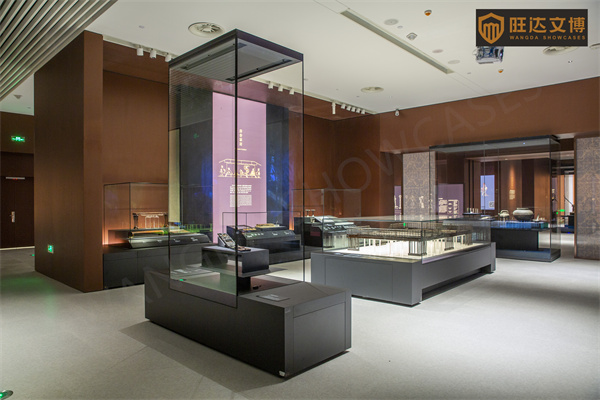
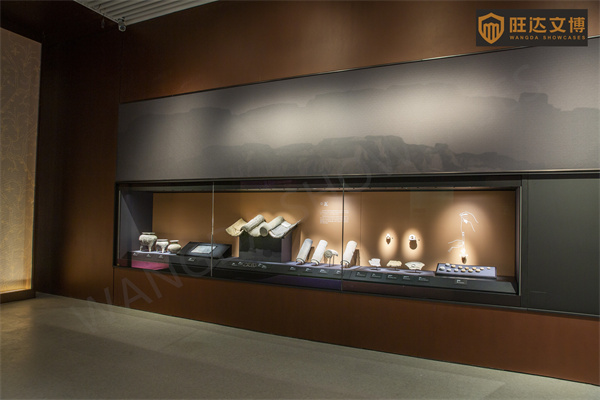
Museum of Forest of Steles, located at No. 15 Sanxue Street, Beilin District, Xi’an City, Shaanxi Province, was founded in 1944 and is the earliest museum established in Shaanxi Province. Its origin can be traced back to the Xi’an Stele Forest, which has a history of over 900 years. The Xi’an Stele Forest was built in the second year of Yuanyou in the Northern Song Dynasty (1087) to preserve the Tang Dynasty’s “Kaicheng Stone Sutra”, “Shitai Filial Piety Sutra”, as well as calligraphy famous steles by Yan Zhenqing, Liu Zongyuan, and others. It was relocated to its current location in the second year of Chongning (1103). Through generations of maintenance and construction, the scale continues to expand, and the collection of stones is increasing day by day. Eventually, a thematic art museum focusing on collecting, researching, and displaying historical steles, epitaphs, and stone carvings was built.


|


WANGDA SHOWCASES is awarded with museum showcase contract for 3 museums in Pakistan

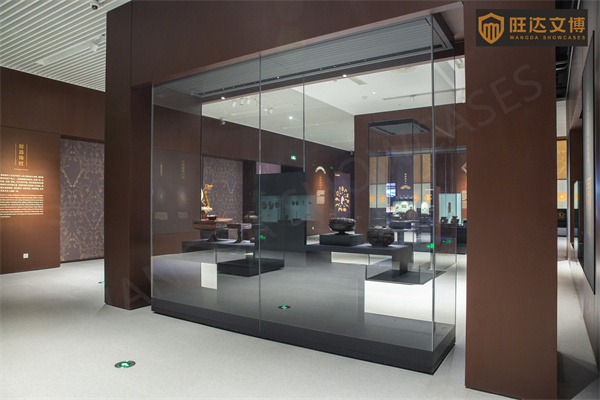
WANGDA SHOWCASES is greatly honored to be awarded with museum showcase/display case/museum display cabinets/vitrines contract for 3 museums(DI Khan museum, ABBT museum and hund museum) in Pakistan. Based on the valuable museum collections, local building style and culture elements,  all the museum showcases/display cases will be tailored with high-end and eco-friendly materials as per the highest international quality and technology standards.

Abbott Museum is located in Abbottabad District, Khyber Pakhtunkhwa, Pakistan. This is a museum in collaboration with Hazara University, representing the old culture and way of life of Hazara. The beautiful building houses furniture, weapons, utensils, coins and swords, as well as some old paintings and paintings.

Hund Museum (Pashto: هنډ لرغونتون) is an archaeology museum located in Hund, near the bank of the Indus River north of AttockSwabi districtKhyber PakhtunkhwaPakistan.[1][2] It is frequented by thousands of visitors annually.[3] Hund is the oldest city in the Swabi district, located on the right bank of the Indus River. It has a rich history and has experienced different eras such as the Gandhara civilization, the Hindu Shahi dynasty, and the Muslim period. Alexander the Great passed by this place in 327 BC and spent a night in the village before entering the Indian plains.[6] A Corinthian column has been erected adjacent to the museum to commemorate his stay.[7]


With 11 Customized Showcases, WANGDA SHOWCASES attended the museum expo in Inner Mongolia

WANGDA SHOWCASES was present at the museum expo that was hold in Inner Mongolia. 11 no.s customized museum display cases with cutting-edge and innovative designs & functions at 130 sqm exhibition booth attracted lots of museum professionals.


For above wall-hung glass hood showcase, the opening is realized by sliding the glass hood out/in via invisible sliding system. Such a design makes the glass hood showcase look pretty neat and elegant.


The display deck for above showcase is made from steel structure, with powder-coating finish. The suface display board is built by stainless steel with copper-plated finish after anodizing treatment.


Above showcases are typical modular showcases that can be connected and combined to different structure & design.


For above two tabletop showcases, one come with wood-like finish that is realized by the technology of wood-texture thermal transfering printing and its opening pillars are concealed in the hollow steel legs, to allow the glass hood to be lift up/down via invisible motor-driving lifting system.  The other tabletop showcase come with movable base to allow the whole glass hood to move forward together with base so that the hinged glass hood can get enough space to open with no any collision with the wall.


Above showcase is customized with pull&slide opening + 90° rotation opening to allow the glass front door to open 60% max. opening and to allow 100% access by 90° rotating the front glass door in parallel with the left/right glass side. Such an opening brings flexibility and convenience for exhibits mounting. 


Above showcase is to allow the bottom metal base to be fully concealed by the movable metal parts that are hollow around the periphery to accomodate incense or something like that to release fragrance. The glass display deck for exhibits to stand is propped by additional vertical glass panels. The magnetic-track lighting system walks along the loop of glass top and also the glass display deck to supply flexible spot illumination.  
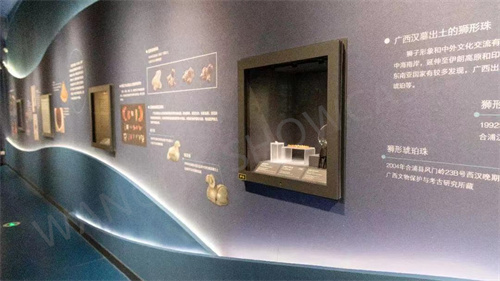

Above showcase is installed with AI/AR system to allow visitors to intuitively learn more about the details of the museum objects by measuring the dimensions of the objects and turning the objects around, as well, to allow visitors to understand the relevant story behind the objects, additionally, the integrated interactive function activate visitors’ interest to take participation in the interaction,e.g. to experience the unearthing the objects.


The East of Shanghai Museum with Museum Display Showcases from WANGDA SHOWCASES Opens to the public

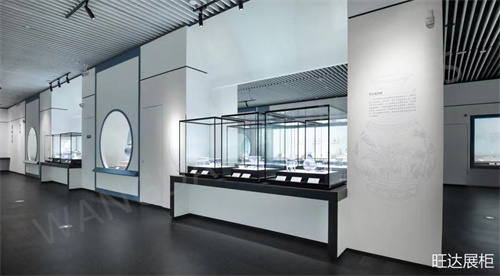
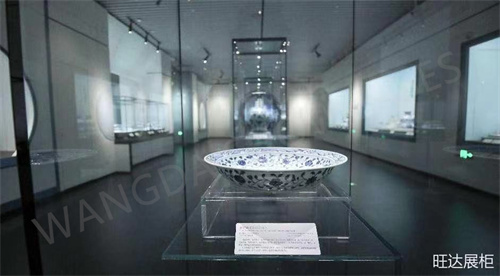
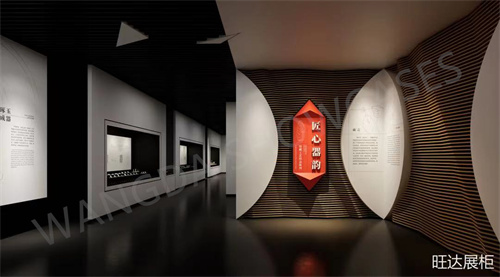
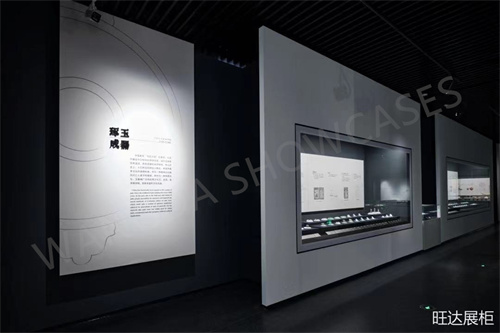
At the end of June in 2024, the East of the Shanghai Museum Opens to the public after 7 years construction. For this worldwide renowned museum project, WANGDA SHOWCASES customized high standard museum display showcases for 6 exhibiton halls: Ceramic Hall, Jade Hall, Imperial Seal Carving Hall, Hall of Ceramic-thematic Exhibtion titled “China and The World: Ceramics and Exchanges” , Hall of JiangNan Creation thematic Exhibtion, Experience Hall of Artific Conservation and Restoration.

Covering 1800 square meters, the Ceramic Hall is located on the 3rd floor of the East of Shanghai Museum. 558 pieces/groups of representative ceramic collections are selected and 50% of the exhibits are displayed for the first time. In order to extremly highlight the ceramic exhibits themselves, the exteriors of museum display showcases are veneered with same marble as wall dressing to make the museum display showcases be integrated into the exhibition hall so as to have the visitors immerse in experiencing the elegance and exquisite painting of the exhibited ceramic colloections.
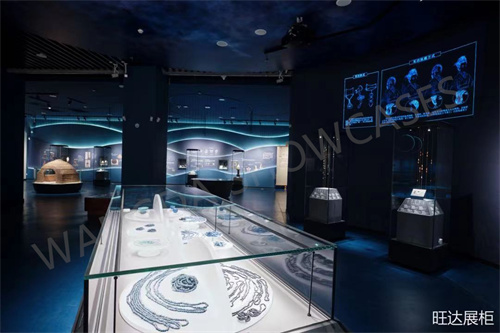


Numbers of curved & speical museum display showcases are customized in order to create an inimitable exhibition impact. The much special structure but the best airtightness and excellent performance with no any compromise comprehensively embodies the cutting-edge technology and exquisite craftsmanship from WANGDA SHOWCASES.


The Jade Hall is located on the 2nd floor of the East of Shanghai Museum. Nearly 350 pieces/groups of priceless jade artifacts like turquoise, agate, jade from the Neolithic Age to the Qing Dynasty are exhibited. The overall design of the Jade hall is warm and elegant. The exhibition space adopts a central layout in the shape of a circle.


The Imperial Seal Carving Hal is located on the 2nd floor of the East of Shanghai Museum. A total of 573 high-quality artifacts related to seal carving of ancient emperors are exhibited, and approximately 35% of the collections are revealed to the public at the first time. It is the first specialized exhibition hall with China’s seal carving collection as exhibition theme in the world. It is the first time to intermingle the history of China’s sealing engraving into the main origin system of seal engraving history of ancient civilizations around the world. With early seal carving history in basin of Mesopotamian, Nile River, Indus River Yellow River as prologue, the exhibition of the comprehensive history of China’s seal carving sarts a new chapter.


The hall of “China and The World: Ceramics and Exchanges”  is located on the 3rd floor of the East of Shanghai Museum. With nearly half collections to be publicly exhibited for the first time, a total of 353 pieces/groups of valuable ceramic artifacts are selected for the exhibition. Intending to write a condensed textbook of the trade history of ceramic items, it is a new permanent thematic exhibition launched by the Shanghai Museum. In the world, it is also the first time to use ceramics as a medium to fully reveal the multidimensional history of economic, political, and cultural exchanges between China and foreign countries druing the Sui and Tang Dynasty to the Ming and Qing Dynasty.

WANGDA SHOWCASES customized all the museum display showcases with the front to be constructed by a whole piece of anti-reflective ultra clear glass with no any any glass joint. By compressing the technical chamber to be extremely minimal, WANGDA SHOWCASES makes the exhibition bring an immersive exhibition experience to visitors.


The Experience Hall of Artific Conservation and Restoration is located on the 4th floor of the East of Shanghai Museum. Through the open restoration display and themed display, unveil the mysterious veil of ancient artfact protection and restoration to visitors. In the open exhibition space, the National and Shanghai Intangible Cultural Heritage Restoration teams showcase the protection and restoration on ancient artifacts of Bronze, ceramics, calligraphy, painting, furniture, lacquerware, ancient books, etc.

Qinhuangdao Museum with museum showcases customized by WANGDA SHOWCASES opened to the public

With all the museum display cases customized and installed by WANGDA SHOWCASES, the Qinhuangdao Museum covers an area of 40 acres with a building area of 26553.6 square meters. The exterior of the museum is designed with elements such as bronze cauldrons, the Great Wall, oceans, and glass, showcasing the cultural characteristics of Qinhuangdao region; The interior is mainly made of ancient gray bricks, drawing on the architectural form of the Ming and Qing Great Wall passes and the construction techniques of the city walls, reflecting the indomitable and united spirit of the Great Wall.


|